Geography of Coffee
James Hayes-Bohanan , Ph.D.
Bridgewater State College Geography
Vanderbilt University Institute for Coffee Studies

UPDATED March 26, 2008

Fair TradeMy coffee obsession began when I started to understand how the fair-trade movement was helping to improve the lives of farm families who work very hard to produce fine coffees and who earn very little for their efforts. I have been fortunate enough to take students to the coffeelands of Nicaragua twice and will return in 2009. I am also working on plans to visit producing areas in Brazil, Cape Verde, and Guatemala before the end of this year.
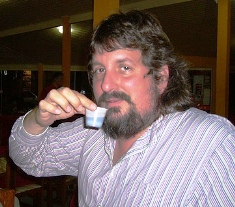
A geograher and his cafezinho
I have expanded this site's information about coffee shops, coffee roasters, coffee tours, health effects,
and coffee preparation, and coffee education. Please explore all of these pages to learn about coffee
-- from the field to the cup!

I would love to speak about coffee to your school or civic organization!
Byron's coffee -- some of the world's best

What is the geography of coffee?

This is the confluence of two of my great passions: learning about the world (geography) and enjoying a hot, bitter beverage (coffee)! In my environmental geography course, I usually spend at least two class sessions discussing the relationship between the beverage in my cup and the bean on the bush. For me, coffee is an excellent jumping-off point for understanding natural resource conservation and exploitation, equity in international trade, the geographic displacement of environmental problems, and global patterns of colonization and post-colonial economic relationships. This page is my humble contribution to the discussion.

Coffee Map - NGS
National Geographic Coffee - learn about the top ten coffee-producing countries (as of 1999) and the climate needed to grow coffee. The NGS site was build before Vietnam became a major producer.


This handy map is found on a wall in the Coffee Museum in downtown Matagalpa, Nicaragua.

The beans are shown in the tropical locations of former colonies; the ships represent the long-standing patterns of trade; and indigenous people represent the connection of many coffeeland people to their ancestral roots.
Geography of Coffee

Vanderbilt ICS

Vanderbilt University has a long-standing reputation as a leader in Brazilian studies, beginning in the 1940s. It may be no surprise, then, that Vanderbilt is home to the Institute for Coffee Studies. I  The institute has been focused on research on the medical aspects of coffee. Drawing on the impressive medical infrastructure of the university and the city of Nashville, that tradition continues, but ICS is now housed in Vanderbilt's Center for Latin American and Iberian Studies. The Institute's mission now includes research on health, research on social aspects of production and consumption, and the encouragement of economic development in coffeelands.

In March 2008, I was honored to join the institute as an affiliated scholar.
Vanderbilt Coffee


Coffee Map
Get coffee maps!

Researchers at Artisan Maps have worked for over a year to create a coffee map of the world and four maps of coffee regions. Learn about the connections between flavor and geography from this informative series of Coffee Map Posters.

The US Geological Service EROS Data Center has created a GIS tool to help buyers and sellers document certification standards and find specialty farms in various categories. Read about the project in ArcNews.


Arc GIS - Coffee


The International Coffee Organization is the main governing body in the coffee industry. Its web site includes an overview of the coffee crisis and a plethora of statistics about coffee trading.

For extensive background on the problems facing coffee farmers, see the September 1995 issue of The New Internationalist entitled Coffee: Spilling the Beans, which includes almost a dozen articles on the politics, economics, and geography of coffee.

Coffee Documentaries

I have found a growing number of audio and video documentaries that are useful in my coffee outreach and teaching, because they help students and other audiences to understand the specific places in which the coffee story unfolds.


Black Gold is a feature film that exposes the extreme disconnect between designer lattes and the farmers who make them possible.

One Cup is a 30-minute film that can be viewed online, about Timor-Leste (East Timor), one of the world's newest countries. Few countries have suffered more than East Tmor, in which hundreds of thousands of people have been killed or displaced with almost no media attention.

The History Channel has produced a good introduction to coffee entitled Modern Marvels: Coffee.

Guatemala: The Human Price of Coffee is an excellent introduction to the coffee crisis as it has emerged amid the beautiful lands, rich heritage, and tragic history of highland Central America.
Black Gold

Coffee and Conflict

Coffee Land Mines
Coffee is grown mainly in the former colonial lands of the low latitudes. In too many cases, the post-colonial legacy includes inequality, uneven development, and violence. The Coffeeland Landmine Victims' Trust was established to help address one particularly tragic reminder of violence that can outlast any peace treaty. In Nicaragua, for example, the civil wars have ended, but the land mines still lurk in some coffee fields where they have been long forgotten.

The Trust works with its own partners and with those already involved in the coffee industry to provide emergency and rehabilitation services to people who are seriously injured by mines.


Note: Although the U.S. government has provided some support for this rehabilitation work, we are one of the few countries that still refuses to stop using mines and cluster bombs, both of which can kill and maim people years into the future.
Coffeelands Landmine Victims' Trust

To learn about the history of the coffee break in the U.S., listen to Susan Stamberg's Present at the Creation report from the December 2, 2002 edition of NPR's Morning Edition (this page includes several related links).

Equal Exchange Coffee As with all of Nicaragua, the coffee-growing North was a dangerous and tumultuous place at the time of the U.S.-funded contra war. Dreaming Nicaragua: Morning Coffee and the Contra War is an engaging and disturbing story that comingles coffee and history.

I recently learned that the state of Rondonia is now the sixth-largest producer of coffee in Brazil, and the second largest producer of the conillon variety.  A Brazzil magazine article, Fleeing the Cold , describes how this has come about. More detail is provided in Chapter 6 of Nigel Smith's Amazonia - Resiliency and Dynamism of the Land and its People.

My friends in Oxfam's Boston coffee campaign have alerted me to a couple of interesting studies on the Oxfam America web site: The Specialty Coffee Association of America SCAA sets the industry's standards for growing, roasting and brewing. Members of the SCAA include coffee retailers, roasters, producers, exporters and importers, as well as manufacturers of coffee equipment and related products.

See the coffee category of DMOZ for more. I was once the editor!

Eat Up is a book about unusual cuisines, written by a Canadian food scientists who travels the world to study the most unusual food and drink he can find. Civet coffee from Indonesia certainly earned his attention. Listen to Professor Marcone's interview on the NPR program Fresh Air to learn, ahem, where this coffee comes from.

Coffeekids Coffee Kids is an international, non-profit organization established to improve the lives of children and families who live in coffee-growing communities around the world.


Coffeelands Music 2
As a geographer, I have become increasingly convinced that learning about local music is an almost essential part of learning about places. Two collections from Putumayo -- one of my favorite labels -- are especially important for learning about the places where coffee originates. They are simply Music from the Coffeelands and Music from the Coffeelands 2 . Each has an eclectic mix of excellent music and coffee-rich liner notes.

Coffee, Health, and Well-Being

"Without my morning coffee I'm just like a dried up piece of roast goat."
~ Johann Sebastian Bach (1685-1750)
Sweet Maria's great historical coffee quotes

Bach could have used this final link: Break Free from Coffee for those who need to cut back!

In "Neither a Panacea Nor a Source of Harm," the Mayo Clinic's Dr. Bauer presents an overview of current thinking about coffee and health.

Dr. Alex Goetz has reviewed "Coffee Talk: Some Surprising Health Benefits," published by Real Age. Like most of the other positive articles I have seen, the article

Dr. Taraneh Razavi offers Coffee, Good for the Brain on her health blog. Some of the comments mention the potential ill effects as well. It was on Dr. Razavi's site that I found Oliver Ray's exquisite artwork.


SAMBAZON!
Sambazon has nothing to do with coffee,
 but it is all about fair trade and
one of my other passions: tropical fruit!
 
Visits since October 28, 2007


Dr. James Hayes-Bohanan
Chair, Department of Geography -- Bridgewater State College
Bridgewater, Massachusetts USA / EEUU / EUA